

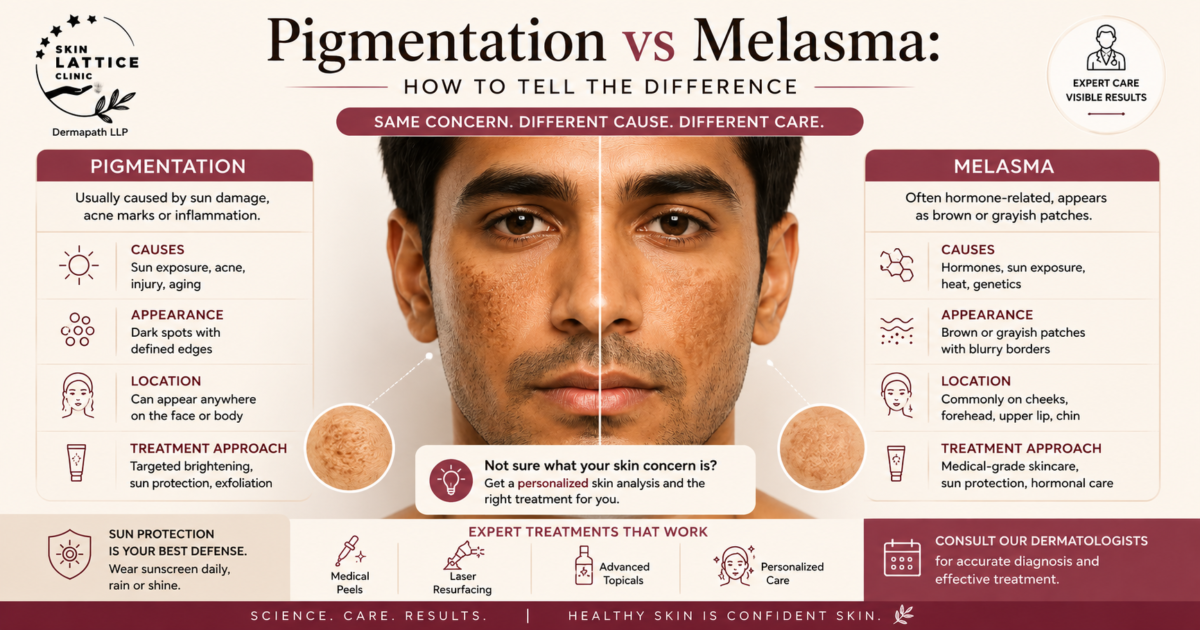
Brown or uneven patches can look similar in the mirror, but pigmentation and melasma are not the same thing. Knowing the difference can help you choose a more sensible treatment approach.
At Skin Lattice Clinic, care is approached with the individual in mind, with practical guidance and treatment options chosen around the skin concern and the person’s goals.
First, What Do We Mean by Pigmentation?
“Pigmentation” is a broad everyday term for areas of skin that appear darker than the surrounding skin. It can happen after acne, inflammation, irritation or sun exposure. That means two people can both say they have pigmentation while actually dealing with very different skin concerns.
Post-inflammatory pigmentation, for example, may appear after a pimple, rash or other irritation has settled. Sun exposure can also make existing discoloration more noticeable and contribute to an uneven-looking complexion over time.
So, What Is Melasma?
Melasma is a specific pigmentation condition that commonly affects the face. It often appears as brown or gray-brown patches and can be influenced by hormonal factors. Sun and visible-light exposure can also make melasma more noticeable.
Melasma frequently appears in a fairly symmetrical pattern, often around the cheeks, forehead, upper lip or nose. One reason it can be frustrating is that it may improve and then return, which makes long-term maintenance an important part of the conversation.
Pigmentation vs. Melasma: The Key Differences
Location can offer a clue. A single dark mark that appears after a pimple may behave differently from symmetrical patches across the face. Appearance matters too: the colour, edges and pattern can provide useful information.
The underlying cause matters most. Pigmentation can be linked to sun exposure, acne or inflammation, while melasma often has a stronger hormonal component. Because the triggers and behaviour can differ, treatment should not be chosen simply because a product is marketed for “dark spots.”
A dermatologist can assess the pattern, history and skin type and help decide what kind of treatment approach makes sense.
What Can You Do to Support More Even-Looking Skin?
Sun protection is one of the most important everyday habits when uneven pigmentation is a concern. Gentle skincare and avoiding unnecessary irritation can also help keep the skin barrier comfortable.
It is tempting to attack pigmentation with multiple brightening products at once, especially when you want results quickly. A calmer approach is usually easier to maintain and gives you a better chance of understanding how your skin is responding.
Why Personalized Treatment Matters
Pigmentation is not a single condition, and melasma can be particularly persistent. What worked for a friend may not be appropriate for your skin. Skin type, tone, triggers, previous treatments and lifestyle all matter.
Skin Lattice Clinic provides pigmentation and melasma treatment in Gurugram with a personalized approach, combining professional assessment, modern technology and customized treatment planning. The aim is not simply to make skin lighter; it is to create a more even-looking complexion while caring for the skin properly.
Think Long Term, Not Overnight
When it comes to pigmentation, patience matters. A realistic plan focuses on gradual improvement, sun protection and maintenance rather than chasing quick fixes.
If you are unsure whether you are dealing with post-acne marks, general pigmentation or melasma, getting the right assessment can be much more useful than guessing.
Frequently Asked Questions
Is melasma the same as hyperpigmentation?
No. Hyperpigmentation is a broad description of darker areas of skin, while melasma is a specific pigmentation condition with characteristic patterns and triggers.
Can pigmentation come back after treatment?
Yes. Pigmentation can recur, particularly when triggers such as sun exposure or irritation continue. Maintenance and sun protection are important.
Can I treat pigmentation at home?
Some mild concerns may improve with a consistent routine, but persistent, spreading or uncertain pigmentation is best assessed by a dermatologist before starting aggressive treatment.
What is the best treatment for melasma?
The right approach depends on the individual pattern, skin type and triggers. A personalized professional assessment is the best starting point.
|
READY TO TAKE THE NEXT STEP? If you are searching for pigmentation or melasma treatment in Gurgaon/Gurugram, book a consultation with the specialists at Skin Lattice Clinic to discuss your concerns and explore a personalized treatment plan designed for you. |
