
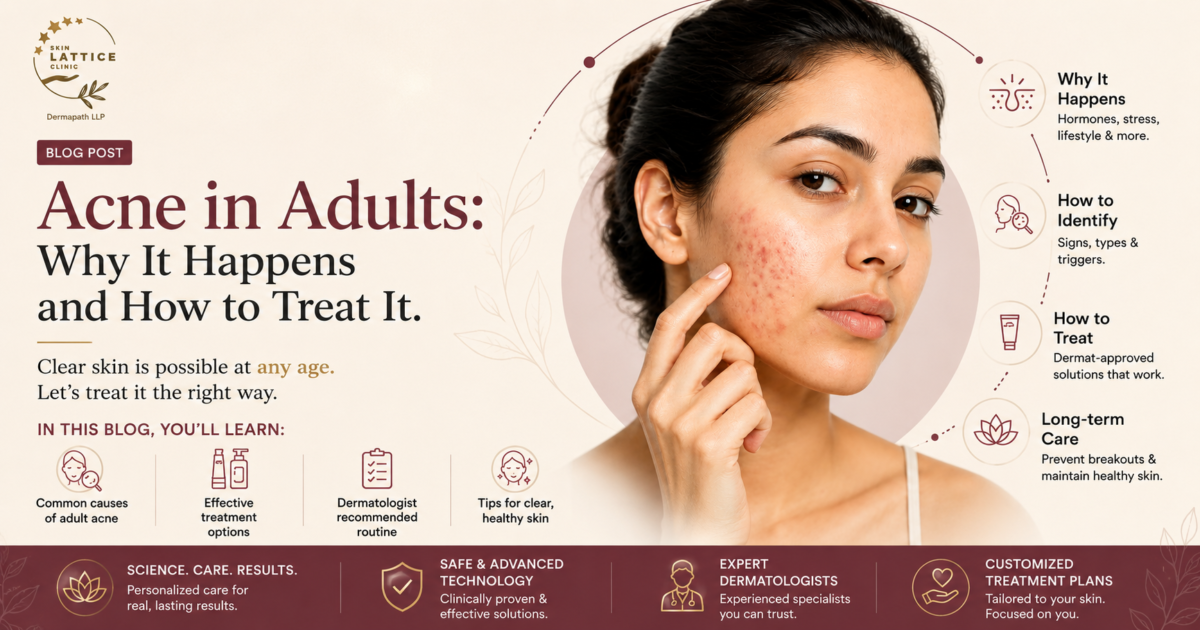
Adult acne can be frustrating, especially when you thought breakouts were something you had left behind. The good news is that acne is common, understandable and treatable with the right approach.
At Skin Lattice Clinic, care is approached with the individual in mind, with practical guidance and treatment options chosen around the skin concern and the person’s goals.
Adult Acne Is More Common Than You Think
Getting a breakout in your 20s, 30s or beyond can feel unfair. You may have already built a skincare routine, changed products and tried to do everything “right,” yet the acne keeps returning. Adult acne can appear for the first time later in life or continue after the teenage years.
The location and pattern can offer clues. Some adults notice breakouts around the chin and jawline, while others see clogged pores or inflamed spots across the cheeks and forehead. The important thing is not to blame yourself. Acne is influenced by biology, skin behaviour and everyday factors, and it often needs a more thoughtful plan than simply “drying out” the skin.
Why Does Adult Acne Happen?
Hormonal changes can influence oil production and breakouts, particularly around the lower face. Stress may also exacerbate acne in some individuals, potentially contributing to more frequent or severe breakouts. It can also coincide with changes in sleep, daily routines, and skincare habits that may further affect the skin. Family history can influence how easily a person develops acne.
Skincare, cosmetics and hair products may contribute to clogged pores for some people. Friction, picking and squeezing can also keep inflammation going and increase the chance of lingering marks or scars. There is rarely one simple explanation for every breakout, so the pattern matters.
Understanding Different Types of Adult Acne
Adult acne can appear in different forms, and identifying the type can help guide the right treatment approach.
Hormonal Acne
Hormonal acne is often linked to fluctuations in hormones and may appear around the jawline, chin, and lower face. It can be influenced by factors such as menstrual cycles, stress, or other hormonal changes.
Comedonal Acne
Comedonal acne includes clogged pores, such as blackheads and whiteheads. It can develop when excess oil, dead skin cells, and other debris block the pores.
Inflammatory Acne
Inflammatory acne typically appears as red, swollen, or tender bumps, including papules and pustules. In more persistent cases, deeper and more painful lesions may develop and require professional assessment.
Acne Scars vs. Post-Inflammatory Pigmentation
Acne scars and post-inflammatory pigmentation are often confused, but they are not the same.
Acne scars involve changes to the skin’s texture and may appear as depressions or raised areas after acne heals. Post-inflammatory pigmentation, on the other hand, refers to the dark or discoloured marks that can remain after a breakout. While pigmentation may gradually fade over time, true acne scars often require targeted treatments to improve their appearance.
Understanding the difference is important because each concern may require a different treatment approach.
How to Identify the Type of Acne
Blackheads and whiteheads are clogged pores. Papules and pustules are inflamed breakouts and may be red or tender. Deeper, painful lesions can be more likely to leave scars and are worth discussing with a dermatologist sooner rather than later.
Then there are the marks left behind. A spot can disappear while redness or pigmentation remains, which means treating active acne and treating post-acne marks are often two different parts of the plan.
Build a Routine You Can Actually Stick With
A good acne routine does not need to feel like a science experiment. Start with a gentle cleanser, a suitable non-comedogenic moisturizer and daily sun protection. Add acne-focused ingredients gradually rather than piling several strong products on at once.
And resist the temptation to squeeze. It is incredibly hard not to, especially when a spot seems “ready,” but picking can increase inflammation and make marks or scars more likely. Consistency usually beats intensity.
When Should You See a Dermatologist?
If acne is persistent, painful, widespread, leaving scars, affecting your confidence, or simply not improving with a consistent basic routine, professional guidance can make a real difference.
Skin Lattice Clinic offers acne and acne-scar treatment in Gurugram and focuses on personalized treatment plans rather than a one-size-fits-all routine. A professional assessment can help separate clogged pores, inflammation, hormonal patterns, pigmentation and scarring so the plan is aimed at the problem you actually have.
Think Beyond the Next Breakout
The goal of acne care is not only to calm the current breakout. It is also to create a maintenance plan that reduces recurrence, supports the skin barrier and helps manage the marks that can linger after acne settles.
Your skin does not need punishment. It needs a routine that is realistic, consistent and appropriate for you.
Frequently Asked Questions
Can adults suddenly develop acne?
Yes. Adult acne can begin later in life. Hormonal changes, stress, product use and other individual factors can all play a role.
Should I stop moisturizing if I have acne?
Not necessarily. A suitable non-comedogenic moisturizer can help support the skin barrier and reduce dryness from acne-focused products.
How long should I try a routine before changing everything?
Give a simple routine enough time to show how your skin responds and introduce changes gradually. Constant product switching can make it difficult to know what is helping or irritating your skin.
When should I see a dermatologist for acne?
Professional advice is especially useful when acne is painful, persistent, scarring, widespread or affecting your confidence.
|
READY TO TAKE THE NEXT STEP? Every skin concern is unique, and the right treatment starts with expert guidance. Book a consultation with the specialists at Skin Lattice Clinic to discuss your concerns and explore a personalized treatment plan designed for you. |
