

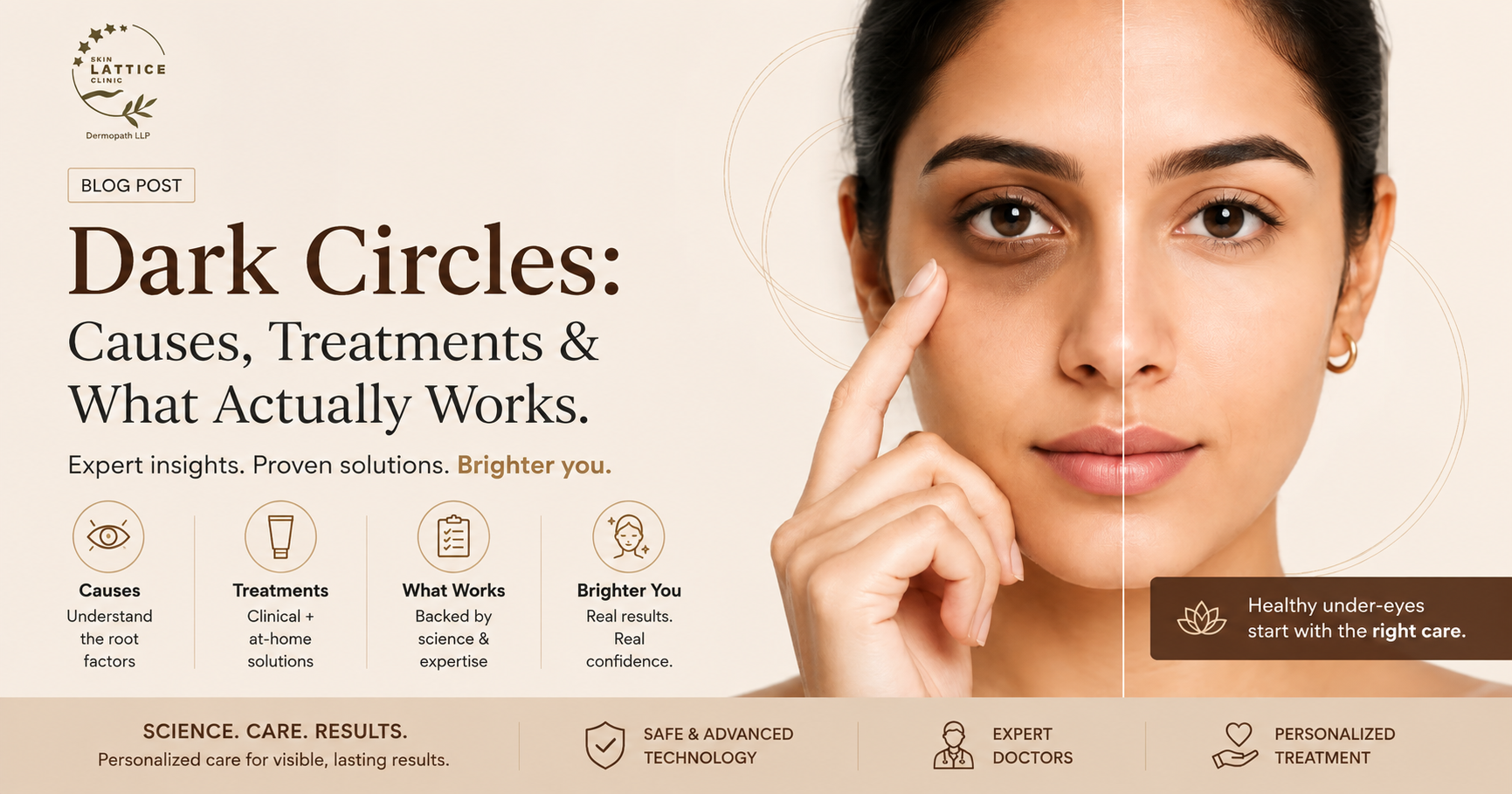
Tired-looking eyes are not always a sign that you need more sleep. Understanding what is really causing dark circles is the first step toward better, more targeted care.
At Skin Lattice Clinic, care is approached with the individual in mind, with practical guidance and treatment options chosen around the skin concern and the person’s goals.
Why Do Dark Circles Happen?
Almost everyone has looked in the mirror after a busy week and wondered why the area under the eyes suddenly looks darker. The frustrating part is that dark circles do not have one single cause. What looks like pigmentation in one person may actually be a combination of thin skin, visible blood vessels, facial shadows, genetics, or changes in the skin around the eyes.
Genetics and natural skin tone can play a role from an early age. Sun exposure and inflammation can make pigmentation more noticeable. The skin under the eyes is also delicate and relatively thin, so underlying vessels can show through more easily. In some people, hollowness or natural facial structure creates a shadow that looks like a dark circle even when the skin itself is not much darker.
Sleep, allergies, dehydration, stress and frequent eye rubbing can make the area look more tired, but they are not necessarily the whole story. That is why simply buying another eye cream does not always solve the problem.
The First Step: Work Out What You Are Seeing
A useful way to think about dark circles is to ask: is the main issue colour, shadow, texture, or a combination? The answer changes what is worth trying.
If pigmentation is the main concern, a dermatologist may focus on gentle skincare, sun protection and treatment options that address uneven tone. If the appearance is mostly due to hollowness or facial structure, topical skincare may have limited impact. When visible vessels or thin skin are contributing, the treatment conversation can be different again.
In other words, the goal is not to treat “dark circles” as one condition. It is to understand the particular reason your under-eye area looks darker.
What Can You Do at Home?
Start with the basics. Be gentle with the eye area, moisturize when the skin feels dry, and use appropriate broad-spectrum sun protection. Avoid rubbing the eyes or removing makeup aggressively, especially if irritation or allergies are already making the area sensitive.
It is also worth being realistic about what skincare can and cannot do. A simple routine may improve hydration, comfort and the appearance of some pigmentation, but genetic or structural concerns may not disappear with products alone. More products are not automatically better; the right products, used consistently, are usually the better place to start.
When Professional Treatment Makes Sense
If your dark circles are persistent, getting more noticeable, associated with irritation, or simply not improving despite a sensible routine, a professional skin assessment can save you a lot of trial and error.
At Skin Lattice Clinic, the approach is personalized rather than one-size-fits-all. A consultation can look at your skin type, the pattern of pigmentation or shadow, your history, and your goals before discussing suitable treatment options. The clinic provides personalized skin treatments in Gurugram using modern technology and a patient-focused approach.
The Goal Is Healthier-Looking, More Refreshed Skin
The most helpful dark circle treatment is the one that matches the reason you have them. That might mean improving everyday skincare, addressing pigmentation, protecting the area from further sun exposure, or discussing a professional treatment when appropriate.
There is no need to chase an unrealistic “perfect” under-eye. Healthy, well-cared-for skin can still have natural texture and variation. The aim is to make the area look healthier and more refreshed while keeping expectations realistic.
Frequently Asked Questions
Can lack of sleep cause dark circles?
Poor sleep can make the area look more tired and can emphasize shadows, but persistent dark circles often have more than one cause, including genetics, pigmentation, visible vessels or facial structure.
Will an eye cream remove dark circles?
An eye cream may help hydration and improve the appearance of some concerns, but results depend on what is causing the darkness in the first place.
Are all dark circles pigmentation?
No. Dark circles can involve pigmentation, visible vessels, thin skin, hollowness, shadows, or a combination of factors.
When should I see a dermatologist for dark circles?
Consider professional advice when the concern is persistent, changing, irritating, affecting your confidence, or not responding to a simple routine.
|
READY TO TAKE THE NEXT STEP? Every skin concern is unique, and the right treatment starts with expert guidance. Book a consultation with the specialists at Skin Lattice Clinic to discuss your concerns and explore a personalized treatment plan designed for you. |
